Weblog of a Christian philosophy student

Weblog of a Christian philosophy student. Please feel free to comment. All of my posts are public domain. Subscribe to posts [Atom]. Email me at countaltair [at] yahoo.com.au. I also run a Chinese to English translation business at www.willfanyi.com.

Name:
Location: Melbourne, Victoria, Australia

Tuesday, January 18, 2011

Defining faith

Faith is often said to be irrational and to involve believing in things against evidence or without evidence. But let's look at what the Bible says about faith.

Hebrews 11:1: "Now faith is being sure of what we hope for and certain of what we do not see."

2 Corinthians 5:7: "We live by faith, not by sight."

The interesting thing about these verses is that sight, which it talks about, is an unusual type of evidence. Sight is probably the most direct form of evidence that we have. There are many other forms of evidence that are not like this, such as an airplane pilot relying on their instruments rather than what they see outside the cockpit window, that is, indirect evidence.

If these verses were written with this idea in mind, if there was a specific and purposeful mention of sight-type evidence, then 'faith' in the Bible can include relying on indirect evidence.

If 'sight' excludes faith, but other forms of evidence do not exclude faith - less direct forms - then faith is extremely common. A pilot could be said to have faith in their instruments according to this definition. A person could be said to have faith in the reliability of their car, in this definition, if they haven't directly observed why their car is reliable, but rely on the engineers, salespeople, etc.

This would make Biblical faith something that is reasonable, because we rely on indirect evidence all the time, and so it would be a virtue to have Biblical faith in a lot of contexts.

Actually, this view has support when you consider how the Bible makes an argument in various places for the Christian life, God's existence, Jesus' claims, moral issues, etc (e.g. Rom 6:2, Rom 1:20, Matt 12:39-40, Rom 5:8).

Labels:

Friday, October 15, 2010

Is belief in God natural?

Suppose I created a robot to pick up rocks and for some reason gave it consciousness. In that circumstance, it would be OK for that robot to feel an obligation to pick up rocks and have beliefs reflecting that desire, because that's what it's been programmed to do and think. In the same way, if God has programmed humans to believe in a 'divine reality', then it would be intellectually acceptable for humans to believe in a divine reality under that circumstance. We'd just be fulfilling our 'programming', which would make religious belief perfectly fine regardless of other considerations.

But what if such a God doesn't exist? If there's only a 1% chance of such a God existing, then this viewpoint should sound silly.

Yet, it's not silly to affirm this point of view if there's a 90% chance of such a God existing.

So then what are the chances that there is a God who wires religious belief in this way? If it's 90%, then we can easily affirm the point-of-view described above. If it's 50% or a bit less, then maybe we can believe that it applies to us but in a way that leaves room for a fair amount of doubt.

If there's no evidence for or against God, then the principle of parsimony (if you can cut something out of an explanation without losing anything, cut it out) reduces the chance of God existing. But the chance that God exists does not thereby become nothing, because the debate about God is also part of a broader debate: is the realm of subjective experiences (mind) one of reality's accidents? Or something that has a place at the very foundation of reality? The latter idea will always be somewhat appealing to people in some form or other, even if it has no other evidence for it.

Also, a lot of believers would say that looking at the beauty of the natural world and the physical laws of the universe (the 'fine-tuning' argument), arguments from the big bang, other apologetics, etc., gives some evidence for a God. If so, then there would be a higher chance of a 'hard wiring' God existing.

What's the lowest chance that a 'hard wiring' God exists for believers to take the scenario above as seriously applying to humanity? In one study people found a 'reasonable doubt' that someone is guilty of a crime to exist at about a 25+% chance of innocence, given the evidence. I suppose that indicates you can get reasonable people believing in something with a 25+% likelihood that it's true. So if you bring this idea into the discussion, then there needs to be a 25+% chance of such a God existing for believers to take the scenario above seriously on purely rational grounds.

Labels: , , , ,

Thursday, June 10, 2010

Two ways we can say God isn't good

Job 1:22: "In all this, Job did not sin by charging God with wrongdoing."

Job 33:9-12: "You [Job] said, 'I am pure; I am without sin; I am innocent; I have no guilt. God is picking a quarrel with me, and he considers me his enemy. He puts my feet in the stocks and watches my every move.' But you are wrong, and I will show you why. For God is greater than any human being."

There are two ways we can say that God isn't good.

The first way is obvious. We can say the Christian God exists, but that He isn't perfectly good despite what the Bible says. That is, the Bible inaccurately describes God.

The second way of saying that God isn't good can be a lot more subtle. I'll illustrate it using an example.

Suppose that a parent loses their spouse and child in a horrific accident one day. It also happens to be the case that the parents had stopped going to church a few months ago because they had just been too tired to go along, what with everything else that had been happening in their lives (or for some other reason).

Suppose that the surviving parent says 'I completely affirm that God is good. The reason why my spouse and child died is because God decided to punish us for not going to church more often.'

The second way of saying God isn't good can be quite subtle. It happens when someone affirms and sincerely believes that God is good, but when they try to explain suffering in their lives they say something about God that implies He isn't really good.

If we affirm that God is good, then we should not try to explain why God has allowed something to happen in our lives that subtly (or more bluntly) says that God isn't good. Because it just can't be true, and so it will mislead people who believe it. The surviving spouse is right to say that God is perfectly good, but something would be very amiss with God if their terrible tragedy was a punishment for not going to church more often.

Sometimes we can explain why God allowed something in a really great way. Sometimes, after enough time has elapsed, we can look at our life and understand really well why God didn't answer a specific prayer, or frustrated a persistent desire.

But if we can't explain our suffering very well, it's a lot better just to stick to our principles, affirm that God is good, and say 'I don't know why God allowed this to happen', rather than come up with a poor explanation.

There are general truths we can fall back on if we don't know the specific reason why God allowed something to happen. Characters in the Bible that we know God was helping and watching over often went through very long periods where God might have seemed distant and uncaring (like the account of Joseph in Genesis). Plus, humanity's unnatural separation from its Creator ensures some degree of suffering (like a fish out of water). Also, God will honour people's free will, allowing them to do evil to others, or damage their own lives.

Labels: , , ,

Tuesday, May 25, 2010

Anxiety

Phil 4:6-7: "Do not be anxious about anything, but in everything, by prayer and petition, with thanksgiving, present your requests to God. And the peace of God, which transcends all understanding, will guard your hearts and your minds in Christ Jesus."

What would have to be true for these verses to be giving good guidance?

I think it would have to be that Christians have almost no control over the major events and occurrences in their life, although it often seems that we do. Instead, God must really be the one in control, who orchestrates the major and many of the minor points of our life. Otherwise worry would be the proper, rational response.

The reason for saying this is that anxiety and worry are always about trying to control something that you believe you have power over, and/or the feeling that it will be awful if you mess something up that you can mess up.

So for example, if I didn't think that I had any control over whether a job interview went well, but I just turned up determined to go through with it, then it stands to reason I wouldn't worry at all about how it would go. It's only if I thought I had it in my power to make or break the interview that I would worry.

Also, if I'm taking an exam that isn't very important then I won't worry either, because I can't mess things up by doing badly. Even if I have the power to do well or do badly, the fact that I don't care how I do on it means I'm not going to try and exert any control over its outcome beyond just turning up and doing it. My lack of concern for control means I won't worry about it.

So it's obvious that anxiety and worry is about control: about believing you can control and affect whatever issue or thing you're worried about.

So for God to tell Christians, "Do not be anxious about anything," God is pretty much saying we have almost no control over the major events of our life, or that they can't be messed up against God's will. Otherwise we ought to try to control these events, and therefore should experience a lot of anxiety and worry as part of that control. Also see Matt 6:24-34 where God says the only things that we should worry about are things that we can obviously and easily affect.

A possible exception to this is that, if we reject what God obviously and unambiguously wants for us, then we can completely go against God's will. But even then God could work around it, and in any case God is assuming in these verses that we won't do that.

Labels: , , , , ,

Wednesday, January 06, 2010

Belief in a personal God is quite different from a lot of other beliefs

Believing the Pythagorean theorem is true will probably not make someone change their life, but if someone believes that the Christian God exists then they have, in essence, no way of not changing their life. Lots of stuff has to suddenly be different. A person has to start reading the Bible, should probably go to church, needs to stop doing XYZ, start doing other stuff, accept that true happiness is found in the actions of Jesus and start conforming oneself to his life, and so on.

If you're an atheist, imagine that God made you have a 100% certain belief in the Christian God overnight and you suddenly woke up and said "I am 100% sure the Christian God exists!" This would probably lead to quite big changes in daily life. Hopefully you would be willing to make them all, otherwise you would experience quite a lot of cognitive dissonance!

It would be hard to objectively evaluate how strong the case is for Christianity if you're not willing in principle to make these changes, should Christianity turn out to have good evidence in its favour. Why? Because you literally can't believe that the Christian God exists (in any real way) without being willing to make these changes. Why? Because a person would experience a great deal of cognitive dissonance if they thought Christianity had good evidence and they weren't willing to change their lives in response, because belief in Christianity = changes to your life. There's a necessary belief => action link. This means that the case for Christianity may be weak, but it's not like you could have decided otherwise if it hadn't been weak - assuming you were unwilling in principle to make changes to your life. This situation makes belief in a personal God different from a lot of other beliefs, which are more 'passive' and have no strong belief => action link.

Labels: ,

Tuesday, November 24, 2009

A definition of grace

Christians often talk about how grace means that we don't and can't 'earn' our way into heaven.

Eph 2:8-9: "Because by grace you have salvation through faith; and that not of yourselves: it is given by God: Not by works, so that no man may take glory to himself."

Rom 11:6: "But if it is of grace, then it is no longer of works: or grace would not be grace."

Think about it. What does it mean for salvation not to depend at all on works? Are 'works' involved in salvation if people who don't care about philosophy at all are more likely to go to heaven - because they experience fewer doubts?

Are 'works' involved in salvation if someone is more likely to go to heaven should they be an incredibly trusting person who accepts whatever religious texts say? And if someone who is very cynical is less likely to go to heaven because they automatically doubt religious authorities?

Are 'works' involved in salvation if someone who is very nice is more likely to accept Christ, because following Christ is more appealing to them? Whereas someone who is an arrogant jerk is less likely to accept Christ?

My answer to all these questions is 'Yes'. I've thought about it a lot and I think that if these situations really occur then salvation has to partly involve works. Otherwise being philosophical, being cynical, and being a jerk makes it less likely you will get to heaven = salvation is partly of works.

So where does that lead us?

I think that if grace is completely grace, that this is the right definition of grace:

Grace: free will is involved, God wants everyone to go to heaven, and our personality and character traits don't put an obstacle in our way when it comes to getting into heaven, and don't give us an advantage over anyone else in that area, at any stage.

And yet, I should add, some people don't make it into heaven.

I'd rather not take Calvin's explanation given passages like Eze 33:11; John 3:16; Matt 23:37; 1 Tim 2:3-4; 2 Pet 3:9 and so on.

If you don't take Calvin's route then grace is hard, very hard, to understand from a philosophical point-of-view. I think this makes grace a lot like free will. Which makes sense if grace involves free will.

No one can get very far in explaining how 'can do otherwise' free will works. But we know that we have free will intuitively, we can act as though we have free will, and we could surely know how free will works through the Spirit, as a form of spiritual knowledge (1 Cor 2:12-14).

Similarly, we can know what grace is intuitively (like free will), we can act on the basis that we are saved by grace, and we can know how grace works through the Spirit, as a form of spiritual knowledge. But I don't know exactly how the definition I gave above (plus some people don't make it to heaven) makes sense from the point-of-view of philosophy.

Labels: , , , ,

Sunday, November 01, 2009

A discussion on whether being infinite = God not needing a beginning, and not being complex

A lot of skeptics would argue that if the universe needs an explanation for its existence, then God needs an explanation as well. Moreover, God sounds a lot more complicated than the universe, so how did we end up with such a complex God?

From a discussion... other person is in [] brackets

I think one helpful way of thinking about this issue hinges on whether God is infinite. We know that in the finite 'world', any kind of thinking or computing requires a lot of complexity. From a calculator to a human brain, finite intelligence needs to be pretty complex to do stuff. The key is whether 'infinity' brings a whole other group of considerations into play. So for example, infinite stuff doesn't behave like finite stuff. Infinity plus infinity plus infinity equals infinity, but 1 + 1 + 1 = 3. Georg Cantor thought that there might be an 'absolute infinite', a kind of existence without distinctions (like 1, -1, 2, -2, 3, -3) that somehow contained every possibility in its being in an absolute unity. A personification of that reality - God - would be 'everlasting to everlasting' and would know everything without being complex.

[But why can't infinity be complex? If the universe was infinitely old, for example.]

If the universe was infinite in the sense of being infinitely old then it would be infinite and complex. There would be an infinite number of things that have happened in the past. This is one kind of infinite, and seems to create a lot of paradoxes. When we try to imagine an infinite that is built out of finite things then it is a lot like trying to imagine the highest number. It's arguable we can't really imagine it.

Another idea of the infinite tries to treat the infinite as a completely different sort of number or (if you talk about 'infinite reality') plane of existence. In the second approach, by saying that the infinite is fundamentally different to the finite, it does sort of make sense without some of the difficulties of the first approach. The second sort of infinite might help God 'escape' the complexity problem, by making it so that we can't talk about complexity in the usual way there.

The latter kind of infinite is based on a logic that contradicts finite logic (e.g. 1 + 1 = 2) but which makes sense within its own 'world'. So it's a development of an alternative logic that makes sense but which is not like finite logic. For example, the members of a 'proper subset' of an infinite set is as large as the whole set altogether, whereas the members of a subset of a finite set cannot be as large as the whole set, because it is just a subset. So while this criticism applies to the first sort of infinity, it may not apply to the second.

[1 + 1 + 1 = 3 no matter where you are.]

Well, no matter what universe you're in, 1 + 1 + 1 always equals 3. No matter the environment. But if infinity actually exists (and isn't just an idea in people's heads) then in 'infinite reality' 1 + 1 + 1 = 1. Infinity plus infinity plus infinity equals infinity. So assuming the reality of infinity, there can be some very strange stuff going on mathematically.

[Mathematically, perhaps, but not physically.]

But if there is really a God then infinity is not an idea in people's heads but is 'out there'. Infinity could not be contained in a trillion multiverses. It would exist, but would be 'too much' to be contained in physical reality. We could not know it through finite reason except in the most general way.

[God would still need a beginning or explanation for His existence, just like the universe.]

It's always strange to finite reason for something to always exist because finite reason starts at '0' and goes upwards forever (1, 2, 3, 4, etc), from the starting point of nothing. But maybe the infinite 'starts' at the infinite ∞ and never changes, so to God maybe it is puzzling that humans ask why there would need to be a starting point for everything.

[How can God just 'be'?]

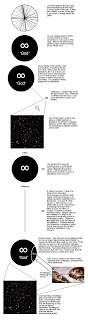
If God personifies this infinite world then He is something like a 'distinction-less unity' that encompasses everything, but somehow in a way that doesn't entail differences/distinctions within what He is encompassing. A person like this is 'everlasting to everlasting' because there are no 'distinctions' like 1, 2, A, B, cause, effect, time, in God (or 'infinite reality') that would allow us to talk about a 'beginning' to Him.

(Picture expressing this idea below, click to enlarge)

Labels: , ,

Saturday, July 18, 2009

Is religion a fairytale that people believe in?


(picture above of the ideas in this article, click on it to see it normal size)


People often object to the idea of a loving God, who happens to be a three-in-one trinity, who became a man to take away our evil (which required His death) because it sounds too much like a story.

But there are reasons for thinking that's not a very good reason to reject Christianity.

Think about this: fundamentally, what is the most basic kind of thing that you can get? What was there first and is the foundation for everything?

Atheists/agnostics say it's inanimate matter - like the chair you could be sitting on.

People who believe in God say that 'mind' is the most basic thing. Before there was inanimate stuff like a table or a chair there was a mind (or 'mind' itself). A 'super-mind', if you will, we call 'God'.

The atheist view has the advantage in that it sounds scientific, and reality can in principle be entirely understood.

The religious view of the world can sometimes look like a story, a tale made up to make sense of the world.

But think about this: if 'mind' is the most foundational 'thing', then how can reality be anything other than an elaborate story? Stories are the stuff of minds; stories are what minds deal in.

Imagine what kind of world would be the case if reality is fundamentally mental. There would be a 'super-mind' at the bottom of it all, who had to exist, who created everything according to (mental) intentions. Sounds like the makings of a story.

So in defense of the storylike view of reality offered by those who believe in God, if mind is at the 'bottom of it all' then this is totally expected. So religion shouldn't be rejected on that basis.

Labels:

Friday, June 12, 2009

Is it impossible for God to be perfect?

Being a just and fair person is a good thing right? It's also good to be forgiving. Therefore a perfect person must express perfect justice and forgiveness, since those are both good traits to have. But surely someone who is completely just would demand justice at times when someone who is completely forgiving would forgive. Therefore, someone who is completely just and forgiving would be a self-contradictory mess. Therefore a perfect person is impossible, as this has no doubt proved, making a perfect God impossible, and therefore a perfect God cannot exist.

The above paragraph is not what I believe, by the way. The above argument has been argued at times to show that God is impossible. The reason why it's absurd is that clearly it makes sense to speak of someone as morally perfect. All they need are perfect intentions. But by placing 'justice' and 'forgiveness' into mental formulas what makes sense can be made to make no sense.

It just goes to show that our intuitions aren't very simple things that can be put e.g. into graphs and formulas. Our intuitions are very complex. So if someone tries to show that God doesn't exist using our intuitions then there's a huge danger that the intuition has been eliminated and in its place is a formula which doesn't quite capture it. I make the same general point in this article on God attribute contradiction arguments.

A doctorate could probably be written on exactly what's wrong with the above argument and the underlying principles it contradicts. We could spend a lifetime buried in philosophical books to show exactly how it's wrong. It just goes to show that we shouldn't be so quick to dismiss a concept if a formula contradicts it, if we have any reason to think that intuitively it can make sense (like the idea that there's a 'super mind' behind physical reality - i.e. God).

Labels: , , ,

Tuesday, June 09, 2009

My Theology in 60 Seconds

How are humans made in the image of God?


(Click to enlarge)


How are humans made in the image of God? We may also ask: how can something finite have anything in common with an infinite God? Here's what I think is going on: before God made any of us, He decided to take on finite aspects and put Himself into finite reality. This would someday allow the creation of people apart from God. Because this process involved God taking on finite aspects, the resulting person who came from it - Jesus - is said to be the 'image of God' (Col 1:15). Through Jesus, God made other people who share in the image of God (John 1:9). God gives brains and bodies a share in the image of God by somehow giving us access to the infinite qualities in Jesus, although we're not God like Jesus is. It's through the image of God found in Jesus that we gain access to qualities like consciousness/mind, free will, love, morality and so on, which make us human and in God's image. Those qualities involve stuff that only the infinite can have, which is why we need to get them through God in the flesh (Jesus) to have them at all.

Free will


(Click to enlarge)


How do we get free will? Free will doesn't seem to make sense in a lot of ways. We get free will through the image of God provided for us in Jesus. Jesus is God, and He gives us access to infinite qualities through Him. So free will is a phenomenon of infinity, borrowed from Jesus/God. We can't understand it very well because we use a finite brain to think, and that means we can only understand finite things. That's why we know that we have free will but have no idea how to explain it. It's the same with consciousness, which also comes through what we get from Jesus/God.

Suffering


(Click to enlarge)


Suffering comes to us through such things as earthquakes, diseases, and evil people, but suffering *also* comes to us through the image of God (our soul), because the image of God makes us conscious rather than a robot.  So having the image of God enables us to suffer. This implies that we need to understand the image of God to have a 'full account' of why we suffer. But finite reasoning can never understand the image of God because the image of God is infinite, given to us by and through Jesus. So the 'problem of evil' must always leave relevant knowledge unexplored. That's why it's such a mystery (see Romans 5:12-14 for how the things of infinity affect the image of God.)

Where does morality and God's goodness come from?


If anyone saw infinity as it really is (i.e. with infinite reasoning) then they will love the person that they see with all their 'heart, mind, soul and strength'.  God loves us and never sins because He sees us as we really are, i.e. He sees our infinite image of God with infinite reasoning (1 John 3:2).  We have a moral sense because our image of God tells us that other people have the (infinite) image of God as well.  To love that which is infinite is to act according to the '2 + 2 = 4' of infinite reasoning.

Why does God value faith?


It's difficult to save people (Matt 19:25) because people will always have free will and finite reasoning in heaven. Why does this present a problem? Well, because our finite reasoning cannot know what infinite reasoning knows. So our finite reasoning constantly creates temptations in us to sin against God and other humans, because we cannot see God and other humans as they really are (i.e. their image of God) - 1 Peter 2:11 (see above). This is why all have sinned and fallen short of the glory of God. God develops our faith and trains us to rely on His word in this life because that trains us to place infinite reasoning above finite reasoning. Why is this important? Because you can only go to heaven if you are willing to accept God's grace for an eternity, and any temptation not to do that is always going to come from our finite reasoning. So it's important for God to help us prioritise infinite reasoning over finite reasoning, because that develops Christians so that they don't reject grace (from a finite reasoning temptation) over an eternity in heaven.

Why does God send people to hell?


God creates a soul by allowing the brain to access the image of God in Jesus. This makes our soul exist in God's infinite 'world', even though it's marred by sin. Now, it makes sense that if a soul (which ought to be like God) does something genuinely wrong, with no excuse, that this could sever or cut-off the soul's connection to God in God's 'world'. A holy and perfect God cannot allow sin in His/Her/Its presence. That's really, really bad for us because our soul gives us consciousness (see above). So having our soul cut-off from God in the 'world of God' infects all of our experiences with some degree of suffering and imperfection. It doesn't matter what's going on outside your head, no matter where you are, a soul cut-off from God's presence will always suffer. Either in a hell in earth (which is where we are), or in another hell. The only way out is to become morally perfect, like Jesus, because then your soul can connect to God, making you as happy as God. There is no 'other option'. Given these kinds of reasons, the only way for anyone to avoid hell forever (interpreted above) is to become morally perfect forever (which is only possible through the work of Jesus, John 14:6).

Informative links:

How are finite things different to an infinite God?
What's the deal with the atonement?
How is this theology - 'infinite God theology' - meant to succeed as an answer to tough questions?
My interpretation of original sin.
Why God lets Christians experience doubt and severe testing.
We can identify four paradoxes to finite reasoning in free will.
What is consciousness, how does it work and why does it love?

Labels: , , , ,

Sunday, May 17, 2009

Why does God value faith 3: One way God uses faith in Christ

Part 1, part 2.

What's so great about believing in Christian theology? Why does God place so much emphasis on believing in a particular, specific religion to get saved?

I have a theory that God uses faith in the following way:

1) God makes an association between Christian faith (an intellectual belief) in someone's mind and the decision to follow Christ (a decision of the heart to follow God and repent).
2) God then allows a lot of pressure to be put on that person's intellectual faith, in order to put a lot of pressure on their decision to follow Christ through putting pressure on their intellectual faith. Why? To ultimately strengthen someone's resolve to follow Christ by making them hold on to it over many struggles. This pressure is known as 'doubt'.

Why do this? Why create (2)?

Because we have to be willing to follow God *forever* in the Kingdom of God; not a limited amount of time. And we have to be willing to walk into the perfect self that God has provided for us all in the cross. Putting pressure on someone's 'intellectual faith' can be used to accomplish greater resolve. It involves suffering, but it is needed for us to walk into the perfect self that God has provided for us, so it is absolutely the right thing for God to do.

So one possible reason God might value faith in Christian theology, and Christian claims, is because it is an easy way to make this situation happen (Heb 12:11).

Labels: , , ,

Wednesday, May 13, 2009

Two kinds of facts

I think you can show that there are two kinds of facts: facts that you can accept without having to make a decision on whether to accept them, and facts that you need to choose to accept before you can know them.

An example of the first kind of fact is 2 + 2 = 4. I could hold a grudge against mathematicians and their discoveries but I could never doubt that 2 + 2 = 4. In a similar way, I could never believe that the moon is made of green cheese.

The second kind of fact you need to choose to accept before you can know. These tend to be facts about other people. For example, I know it's a fact that everyone has the right to freedom from violence, unless they do something really awful.

But not everyone knows this. Evil dictators, for instance. But we do. So why can't we go up to an evil dictator and say 'Look, it's a fact that people deserve more than this'. I could convince anyone that the moon is not made of green cheese with superior arguments. But I could never convince the dictator that people have rights, not in a million years. That conversation would go nowhere pretty fast. Yet people do have rights... So clearly some facts you need to choose to accept them before you can know them. That's how a 'dictator' doesn't really know what we're talking about when we tell them they're wrong.

I think this applies to religious debates as well. It seems obvious to me that we just can't understand God perfectly through reason. We just can't with finite intellects. And yet so many arguments against God's existence rely implicitly on a) Finding the right definition of God in Christianity, and b) Showing that it's contradictory. How could you do that when it's impossible in principle to ever intellectually understand God? So, to really see where religious people are coming from you would need to choose to accept something like an finite/infinite divide in reasoning and so on...

Labels: , , ,

Tuesday, May 05, 2009

Why does God value faith 2: Moral faith versus religious faith

Part 1, part 3.

'Faith' has gotten a bad reputation in recent times because of its connection to religion. A lot of people do really bad things because they have some kind of faith that leads them to do evil. For some, faith is a bad thing not because it can sometimes cause people to do wrong, but because it's seen as irrational.

I think it's interesting that 'faith' is used so often regarding religion, but it's used less regarding morality. I think that the concept of 'faith' can have just as much connection to morality as to religion. I'll give you an example:

Take a case frequently occurring, where someone does something really awful to someone else. Would it be easier to seek justice or revenge, or to forgive the wrongdoer? It would be much harder to forgive. Way, way harder.

To forgive someone for a reasonably big slight goes against our natural instincts. It goes against the demand either for justice or revenge (which one it is depends on whether the wrong is really wrong).

When someone does forgive a serious wrong, then it would be fair to say that they are acting against their own human nature, which seeks recompense. So how does one find the ability to act against one's own human nature?

Unless it's beneficial to forgive others, then forgiveness can only happen through some kind of faith: either faith in God/Karma, or faith in the idea of forgiveness itself.

Let's say that the person doing the forgiving doesn't have a religious bone in their body. It seems that such a person would need to have faith in the idea of forgiveness, because otherwise it wouldn't be likely to happen.

Now, the point here is that such people are thought to be very nice. People wouldn't necessarily think they should do the same thing, but they would say 'That person is very nice' (I'm talking about wrongs against the forgiver, not wrongs against others/the community. It could depending on the situation be immoral not to take steps to protect others/the community).

So faith in good intentions (in this case forgiveness) is associated with kindness.

People being nice is a good thing... so this kind of 'faith' can be argued to be a good thing as well. You could call it 'faith in trying to have good intentions' or 'moral faith'.

Why does 'moral faith' involve faith? Well, it's not like you can rationally persuade people to be good, like Socrates tried to do. If you could, then no one who could reason would be bad. People are bad because being good is often non-rational. So 'moral faith' involves the irrational... it involves taking a 'blind leap', where a person chooses to have good intentions to a non-rational degree.

So actually, regardless of your position on religion, it seems that faith in some situations is definitely a good thing.

Continued here...

Labels: ,

Wednesday, April 22, 2009

Why is religious thinking so common to people? Why God isn't going away


(above picture gives a summary, click on it to see it normal size)


There's a common idea out there that 'reasoning' and 'rationality' means something like 'secular reasoning,' or reasoning that excludes religious ideas. I don't really think that's the case. I would say that there are two kinds of reasoning that people engage in: 'inanimate object' based reasoning and 'Mind' based reasoning. The difference is like between working out where a ball is going to land, versus working out whether my friend would be offended if I said a particular thing. What people regard as the 'secular' view comes from looking at reality through 'inanimate object' based reasoning, and what people regard as 'spirituality' and 'religious thinking' comes from looking at reality through 'Mind' based' reasoning. Neither is inherently superior or inferior to the other.

If no mind is behind the universe, then inanimate matter must go 'all the way down' (like the turtles). That's why any consistent atheism-agnosticism position must put inanimate matter at the foundation of reality, from which you get everything else (universe, multiverse, people, etc.) Materialism doesn't just follow from atheism, it IS atheism in any really long explanation of what atheism must mean (otherwise some kind of 'super mind' would exist behind the universe in some sense). So atheism-agnosticism comes from viewing reality through 'inanimate object' based reasoning.

Religious thinking comes from viewing reality through 'mind-based' reasoning. It assumes that the foundations of reality are fundamentally mental - a mind like us. Not necessarily like us in our limitations, but 'something like consciousness.'

Either of these positions is an assumption. While atheist/materialists often accuse religious people of exploiting folk intuitive ideas of consciousness, a spiritualist/religious person could accuse an atheist of overemphasising 'inanimate object' based reasoning when they work out their view of reality.

This is why the religious instinct, religion, and religious forms of reasoning will never go away. Being conscious ensures that 'mind-based' explanations for reality will always make sense. The religious instinct is inseparable from consciousness and people viewing reality through 'consciousness' language over and above 'inanimate object' language. This means that although traditional religions may fade, spiritualism can never go away, or even probably, lessen much.

Labels: , ,

Sunday, March 22, 2009

Why Christians are tested; why God lets us experience doubt

I should caution that in places this contains a fair degree of theological speculation...

I think that before we had physical bodies, God made our souls (Jer 1:5) and He 'knew' how everyone would choose in an infinity of possible situations. Some people God knew would come to Him very easily, some people would come to God through a lot of effort, and some people would not come to Him at all.

In Zec 13:8-9 it says that 1/3rd of all the people in this age will be saved. That seems a bit high considering traditional talk on how hard salvation is. But it's not when you consider how many people die outside the age (children) or state (mentally disabled) of accountability, and thus go straight to heaven.

Even more people are saved than that. In the next age (where the lion lies down with the lamb) virtually everyone will be saved (Isa 33:20-24).

It's interesting to me that most people in the Kingdom of God (those outside the age/state of accountability, and the people in the next age who live in a paradise) will have undergone virtually no testing at all in their faith. But obviously, almost all Christians who are mature Christians in this world and serious about their faith undergo moderate to severe testing in their faith, in all kinds of ways ("I will refine them as silver is refined" - Zec 13:9).

I think this is because state-of-accountability Christians in this age are composed of the souls that God has identified as 'borderline cases'. There's something about us that means we need to change in some way before we will accept God's grace forever, never taking leave of it in the Kingdom. But change we can. So God puts us in difficult situations and tests us over our lives so that when we die, God knows that we have changed in ways that will allow us to accept His grace forever. Unfortunately, this testing is grievous (Heb 12:8-11). But it changes us in ways that are needed for us to live forever in God's Kingdom, so it is absolutely the right thing for God to do.

So God's will is for ALL state-of-accountability Christians in this age to be tested, possibly severely, and to pass, and He will always provide us with a way out if we choose to take it (1 Cor 10:13). So all accountability-age Christians have been inserted into history facing the specific (often painful) tests that will, with enough time, change us in ways allowing us to be with God forever. Our salvation would be in danger without these personality changes, because without growing in His word God foreknew that we would have failed at some point in the Kingdom of God by rejecting His grace.

Labels: , , , ,

Sunday, March 01, 2009

Podcast: The theology of an infinite God

Podcast Notes:

-It's often said that we can never understand God using our intellect. Why is this? Is it because God is infinite? But what does that mean? This podcast discusses the nature of God as an actual infinity. This kind of discussion can help to explain why our limited reason is on the 'wrong level' needed to fully understand God.

Title: Theology of an infinite God (OR: 'Why we can't ever intellectually understand God')
Time: 20:32 minutes
Size: 9.4 MB mp3

Direct link to the audio file (Right click and 'Save As')
Link to the audio file page

A couple of important clarifications:

-I should note that I'm not saying there's no difference between good and evil with this distinction-less idea. Evil comes from 'messing up' the A = A (love) of the infinite world, which can't happen to God because He's consistently infinite in every respect (so there is no evil in God). But we do evil because we're not all-infinite and so can be tempted to make mistakes. There's also a difference between anger and love in God, but only when viewed through finite reasoning. Both God's anger and love are part of a single whole that is His personality, but this is divided into sections with our finite reasoning.
-Also, on the trinity, there really are three distinct persons in distinctionless existence who are also one person. This is a mystery to finite reasoning - maybe it comes out of distinctionless existence being conscious and loving in some way? It's a mysterious attribute of fully infinite persons. These ideas shouldn't be taken to go against the trinity.

Further reading:

-Article on which this podcast is based.
-A longer version of the above.
-The theology talked about in this podcast transcribed into a few pictures.
-My theology in 60 seconds.
-What is a soul? (longer article).

Labels: , , , , ,

Saturday, February 28, 2009

Why we can't ever intellectually understand God

Podcast of this article. Longer version.


(Picture of the relationship between God and the finite above, click to enlarge)

1: What kind of thing is God compared to e.g. a chair?

Saying that God is infinite raises a lot of questions. What does that even mean? What is an infinite object like compared to a finite object, like e.g. a chair? We may understand what an infinitely long line would be like, but what is an infinite object like?

I think the answer is that the core difference between infinity and finite existence is that infinity doesn't allow for a concept of distinctions. For example, if you had an infinitely long and wide plain of grass then you could not find your location on it, since every place has the same attributes as every other place. So infinity tends to take away distinctions.

That's how actual infinity I think 'reaches' infinity, because it comes from a world where there aren't any distinctions at all, and within this distinction-less existence somehow every possible distinction exists, 'distinction-lessly'. That's basically what kind of object God is: a distinction-less object. It's how God knows everything; within His distinction-less existence every possible distinction is contained in a way that allows Him to look at every possible distinction (∞) all at once.

That's why finite reasoning is limited. Since there are an infinite number of possible distinctions between things (e.g. various numbers, sizes, dimensions...) you need the vantage point provided by the 'distinction-less' world to know everything. Or you will always have more possible distinctions to think about.

2: Why this means we can't ever intellectually understand God

This explains why our intellectual (but not necessarily emotional) understanding of God is always messed up: our reason *always* tries to introduce distinctions everywhere it goes, but when it comes to God this simply isn't reflective of reality. And there's just no alternative way of looking at our creator without tying our reasoning in knots. In other words, we can't understand distinction-less existence, and yet we must to understand God.

So, to sum up, we're left with a flawed intellectual understanding of God, or mystery. But we can still know God on an emotional/spiritual/soulful level, which we and God have in common (by that I mean, our soul is somehow like God in the sense that it's made in God's image).

3: A few important clarifications on God being love, a person and a trinity

I want to point out that this seems like a strange idea of God, very far from the loving father of Christianity. The Bible says that God is love. How is the God that I've described love?

I think we need to remember that something being simple in finite terms is very different from the kind of judgements anyone can make about the infinite, the reasons for which I've partly covered. In finite terms, something is simple if there's just 'one' of them, so 'one' is a simple, easy to understand number. In finite terms, the idea of God I've just described is a very 'simple' idea of an ultimate reality, because there's just 'one', it's easily defined and so on.

Finite simplicity argues against the Christian God. But finite simplicity has no connection to the kind of judgements you can make about the infinite, because the infinite is an entirely different kind of thing. So actually, what's simple when it comes to the infinite may be complicated to the finite. I think that the trinity, God being a person, and love coming from God, are such issues.

Somehow, for some reason, the infinite is three persons in one person, which are both three and one at the same time. Finite reasoning has just been thrown out the window, but that's OK, because this is on a different 'level' of reality. Distinction-less existence in other words, is a person, a trinity, and love, in a way that seems really complicated to finite reasoning but which actually isn't. God is the simplest kind of thing you could imagine, but from an infinite perspective rather than a finite perspective, which pretty much makes no sense to finite reasoning but oh well. We shouldn't expect it to.

Labels: , , ,

Saturday, February 14, 2009

Podcast: Do Christians give up thinking?

Podcast Notes:

-Do Christians give up thinking? When you become a Christian, does that mean that you lose the use of your reasoning? Why does Christianity have such an emphasis on action rather than reasoning?

Title: Do Christians give up thinking?
Time: 15:29 minutes
Size: 7.1 MB mp3

Direct link to the audio file (Right click and 'Save As')
Link to the audio file page

Further reading:

-What was I referring to when I talked about souls being infinite? And humans being partly infinite and partly finite?
-A look at 'active' versus 'passive' thinking on the issue of objective morality.
-Where does love come from, the most primary emotion in theology?
-What is a soul?
-Why is God good?

Labels: , , , ,

Thursday, January 15, 2009

What's Wrong with Human Reason?

This illustration helps explain the ideas in this article (click to enlarge).


A lot of Christian thinkers attack human reason as not being very good. In Romans 3 Paul criticises a common philosophical argument against God as mere 'human reason'. So what's wrong with human reason?

Well, the only thing wrong with human reason is that it's finite - it's limited. Because only God can be fully infinite (as there can be only one infinity), creatures had to 'lose' (in a manner of speaking) God's way of reasoning to be created, and the result is finite reasoning, which is infinitely less than the reasoning of God. The problem is that finite reasoning just can't understand everything about God.

I'll illustrate how this might work in practice using some examples from mathematics.

Let's say that you wanted to solve an incredibly hard mathematics problem. Let's say that you wanted to test whether all numbers follow a certain prediction. A mathematician wouldn't look at every number to find out the answer; that's impossible (for us). They'd find some technique that would allow them to figure out the answer after looking at a large but not infinite selection of numbers. Whereas God, with infinite reasoning, could look at *every* number to figure out the answer. God could solve e.g. the Riemann hypothesis by looking at every number there is, an actually infinite series of numbers. God could do the same for every mathematical problem.

Now, if God were finite, then we could eventually come to understand God using our reason. If God were finite, then understanding God would be like understanding a very difficult but ultimately graspable concept. But because God is an actual infinity (see what I mean by this here) then understanding all the mysteries of God would be like looking at every number (as in the above example). We can use 'shortcuts' to talk about God - e.g. say that God is loving - but we cannot actually understand God through limited reasoning. As Paul says in Romans 11:33 "O the depth of the riches both of the wisdom and knowledge of God! how unsearchable are his judgements, and his ways past finding out!"

The difficulty that every creature faces in understanding God is bigger than not being able to 'search out' His ways. There's a different kind of 'logic' applying in the infinite world compared to the finite world, that we just can't grasp very well.

Here's an example of finite logic versus infinite logic. In finite terms, 1 + 1 = 2, and one orange plus another orange makes two oranges. That's the logic of the finite world. Now, let's try to put infinity into the finite world. We don't know the value of infinity, so let's just say that infinity = 'X' and leave 'X' undefined. If infinity = X, then according to human reason X + X = 2X, so infinity + infinity = two infinities. But we know that infinity always remains infinity. You cannot take anything away, or add anything to infinity to change it. So infinity + infinity = infinity. So X + X equals 2X... but X + X in this case also equals X! That implies that 1 = 2.

But, you might say, human reason actually can understand infinity because at least we know that these puzzles exist...

But is that really the case? What kind of reasoning do humans use to understand the infinite? Finite reasoning. What kind of reasoning fits best with the infinite? Infinite reasoning. So shouldn't we be drawing mainly on infinite reasoning to understand the infinite, i.e. to draw conclusions about it, and make judgements as to its nature?

Christians believe (in the philosophical interpretation of this essay) that if we looked on the infinite with infinite reasoning then we would understand all mysteries of God. The problem is that to create us God had to give us a form of reasoning that is monumentally 'cut down' compared to what He has. A side-effect of this severely cut down form of reasoning is that we need to use the 'tool' of faith to understand the infinite (God) in the way that He really is (Hebrews 11:6).

OK, why is it such a big problem that we can't understand all the mysteries of God, or the logic of the infinite very well? What's so significant about this?

Well, just like we can't understand God fully, the fact that we have finite reasoning means that we can't understand other people fully!

Let me explain... it's the fact that we have finite reasoning that makes humans unable to fully understand themselves, other people, and God, and this allows us to be tempted by sin.

How so? Well, there's something about infinity that is incredibly perfect and wonderful, such that when people see infinity as it really is they give unconditional love and understanding to whoever they see. Because God encompasses all of infinity, the first and greatest commandment is to love God with all your heart, soul, strength, and mind (Luke 10:27). God's infinite nature is why God deserves the most love, honour, and respect above anyone else when He is perceived by a mind that desires to follow infinite reasoning (Rev 4:9-11).

We know that God is infinite, but what is less well-known is that when God made us in His image He used His power to put "eternity (i.e. infinity) in our hearts" - Ecc 3:11. In other words, the good news for humans is that there's a divine spark in all of us as well. Because we have infinity inside us (i.e. our soul), the same love, honour and respect that applies to God also applies to humans to a lesser (but still great) degree. So if anyone saw you or me as we really are - if they saw our soul - then they would love us unconditionally forever. In such a way do we receive the next greatest commandment from the Bible "You shall love your neighbour as yourself".

Why is it that everyone who looks on infinity as it really is (i.e. who follows infinite reasoning) will love God and other people with all their heart, mind, soul and strength? How does that come about? I don't actually know with finite reasoning. It comes somehow from infinity, in a way that finite reasoning just can't understand.

If we only had infinite reasoning, then we would never struggle to love others and God with all our strength, any more than we currently struggle to figure out whether one plus one equals two. That's why it is impossible for God to be tempted by evil. God cannot be tempted by evil (James 1:13) because He knows these infinite truths through His reasoning. On the other hand, humans can never know these infinite world truths through our reason (infinite reasoning always being inaccessible to humans) but only through our moral sense that comes from our soul. Because our finite reasoning knows nothing about infinite reasoning the way God knows, humans are continuously tempted to act against infinite reasoning, which is sin (i.e. not being perfect).

Of course, finite reasoning can be used to honour the truths of the infinite world - for example, using reason a scientist can cure a terrible disease and help many. But it can also lead us astray very easily. As David Hume famously said "It is not contrary to [finite] reason to prefer the destruction of the whole world to the scratching of my finger". Hume here illustrates how disconnected finite reason is from morality.

It's humanly impossible to do justice to infinite reasoning because we would only see why we should be perfectly good if we understood infinite truths. But we can't understand any infinite truths through our reason, so we simply can't know why we should always be perfect in a way that would actually be effective (although we can understand infinite truths on an emotional level). Because we can never know these things, human beings, consequently, can never be perfect without a miracle from God.

When the apostle Paul says that 'All have sinned and come short of the glory of God' I believe he refers to three things: a) We have no hope of avoiding the temptation to sin because we have finite reasoning, b) We know whenever we sin that we shouldn't sin through the witness to infinite truth given by our soul, and c) We are fully responsible for our sin because we have free will through our soul (which is a gift from the infinite world).

In my interpretation of hell, these three things together force God to push the infinity that He's loaned to us really far away from Himself, in order to separate the part of Himself being used to sin from Himself, and this results in earthly suffering, and in the same way later on, hell (Gen 2:15-17; Romans 1:18-19).

Labels: , ,

Monday, January 12, 2009

Podcast: What is atheism? Is atheism the default position?

Podcast Notes:

-Atheism isn't the position that there's only the universe, or that a mind didn't create the universe. It's the view that at a basic level the foundations of reality are made of matter rather than 'conscious stuff'. Christianity is a variant of the view that the foundations of reality are 'conscious stuff' rather than matter.
-Is God-belief totally unreasonable? It's often argued that the best argument for atheism is that there's no evidence for a god. But it may be more of a 50/50 thing rather than a slum-dunk for atheism if there's no evidence for a god. There possibly isn't a 'default position' on the issue.

Title: What is atheism?
Time: 13:43 minutes
Size: 6.3 MB mp3

Direct link to the audio file (Right click and 'Save As')
Link to the audio file page

Further Reading:

-An article on this.

Labels: , , , ,